
Beetroot Red in Dairy and Meat Products
: Application Notes
Beetroot Red can be evaluated as a natural red-to-pink color for selected dairy and meat formulations, but the right grade and result depend on the product matrix and processing conditions. Henan Zhongda Hengyuan Biotechnology Stock Co.,Ltd. offers Beetroot Red as a water-soluble powder, water-soluble liquid, and oil-soluble liquid. Its supplied product information describes a betanin-based color extracted from red beet, with a purple-red appearance and water solubility. The practical starting point is to define the intended shade, confirm local permitted use, and test the selected form in the finished formula rather than relying on a color sample in water alone.
What formulators need to solve
Choosing a red color is not simply a matter of matching a reference swatch. Dairy and meat products contain different ingredients, undergo different processes, and are sold in different formats. A color that looks suitable in a simple liquid may not deliver the same appearance after mixing into a dairy base, heating in a meat process, or storage in the intended package. The relevant question is therefore not only whether a colorant is red, but whether its hue and appearance meet the product brief after the actual manufacturing and storage steps.
For product developers, the main decisions are interconnected: which Beetroot Red form can be handled in the plant, what shade is wanted, when the color should be added, and which process and storage conditions the formula must tolerate. The product information identifies moisture activity as a factor that can influence Beetroot Red. This makes moisture exposure, the formula’s water phase, and the conditions used during processing useful points to include in trials. It does not establish a universal performance result for every dairy or meat product.
Regulatory review is another essential part of selection. A colorant’s suitability is specific to the destination market, food category, and applicable conditions of use. Product availability or a certificate does not, by itself, establish permission for every application. Confirm permitted use and any applicable use levels with the responsible regulatory team before commercial production.
Industry background: why the same color needs different application checks
Dairy and meat are broad product groups rather than single formulation environments. Dairy applications may include products with different fat, protein, acidity, and water characteristics. Meat applications include products with varying ingredients, structures, and thermal steps. Those differences can affect how a color is dispersed, how it appears, and whether it meets the desired visual target after processing. This is why application-specific bench testing is more useful than assuming one dose or one process recommendation will work across a whole category.
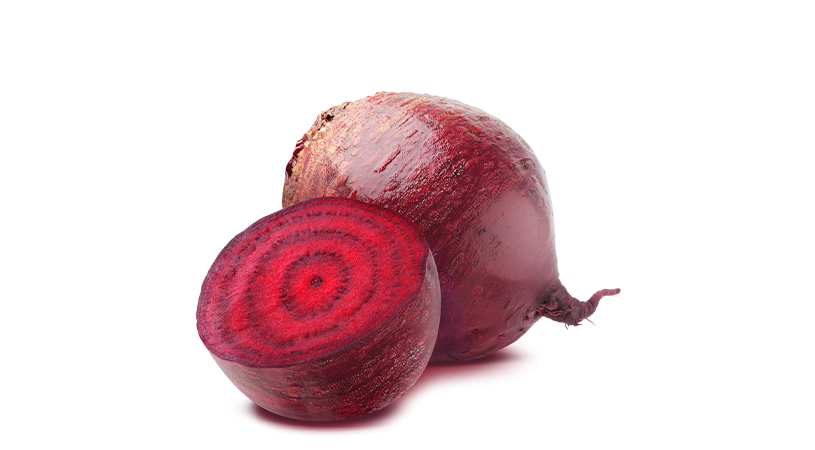
Beetroot Red is described in the product record as a color extracted from red beet, with betanin as its main pigment component. The supplied specification lists a purple-red liquid or powder and water solubility for the powder. It also lists water-soluble powder, water-soluble liquid, and oil-soluble liquid formats. These formats provide options for assessing handling and incorporation; the format should be chosen in relation to the plant’s mixing method and formula rather than by appearance alone.
The product information gives more than one description of the color’s pH behavior: one specification describes purple color stability under aqueous conditions at pH 4.0–6.0, while the selling information describes a red tone within pH 3.0–8.0. These statements should not be treated as a single guaranteed operating window for every grade and product. Ask for the technical information for the intended grade, then verify the actual formula’s pH and appearance during a trial. This careful interpretation is especially important when a dairy or meat formula differs from the conditions used to characterize a color ingredient.
Application principle: Treat stated characteristics as a basis for selecting a trial, not as a substitute for a finished-product assessment. Confirm color, dispersion, sensory impact, process compatibility, and storage appearance in the actual formula.
Detailed solution: evaluating Beetroot Red for dairy and meat
Henan Zhongda Hengyuan Biotechnology Stock Co.,Ltd. supplies Beetroot Red / Beetroot Concentrate within its natural color portfolio. The Beetroot Red product record identifies the source as red beet and the principal pigment as betanin. It lists water-soluble powder, water-soluble liquid, and oil-soluble liquid forms, and identifies dairy, meat products, sausage, and plant-based meat among relevant application categories. That combination makes the product a candidate for formulation trials in these sectors, not an automatic fit for every individual product.
Start with the intended appearance
Write down the target before selecting a sample. Specify whether the desired result is pink, red, crimson, or purple-red; whether the color should be uniform throughout or concentrated in a visible component; and whether the product is being reformulated or developed from the start. A visual target helps the technical team recommend a suitable form and gives the trial a clear pass-or-revise criterion. The product information describes Beetroot Red as red to pink powder and notes a red-to-fuchsia color in water. The final shade in a food matrix still needs to be observed in the target formula.
Choose a form that fits the process
The powder and liquid formats can lead to different handling choices. A water-soluble powder may suit a process designed for dry ingredients or preparation of a liquid premix. A water-soluble liquid may be convenient where the process already meters liquid ingredients. An oil-soluble liquid may be relevant when the intended incorporation phase is oil-based. These are practical selection questions, not a claim that one format will outperform another in a specific recipe. Confirm grade details, incorporation instructions, and compatibility with the production method with the supplier.
Assess the formula, not just the ingredient
Make a small, controlled trial in which the color is evaluated in the complete dairy or meat matrix. Record the formula and mixing sequence, the color’s point of addition, process conditions, the appearance immediately after manufacture, and appearance after storage under the product’s planned conditions. Use a consistent reference and lighting when comparing samples. For meat and poultry, the company’s application information includes Meat & Poultry and Sausage; for dairy, the Beetroot Red product record lists dairy as an applicable industry. These category references indicate potential areas for evaluation, not a guarantee of an identical outcome across product types.
Consider moisture and storage
The Beetroot Red specification notes that the color is easily influenced by moisture activity. Include this factor in the product-development review, especially when comparing formulas with different moisture characteristics or evaluating a change in packaging or storage. The supplied product information also describes good light resistance. That statement can guide the test plan, but finished-product appearance still needs to be checked in the intended package and storage environment. Do not infer a shelf-life result from an ingredient description alone.
Confirm legal and certificate scope
Check the destination market’s rules for the specific product category and proposed use. The supplier’s general instruction for food applications is to add in accordance with the regulatory requirements of the respective country; its application notes also state that dosage should follow local food regulations and that color performance needs pre-formula testing. Henan Zhongda Hengyuan’s supplied Kosher Certificate record lists BEETROOT RED within its scope, and the VeganSu certificate record also includes BEETROOT RED in its listed products. Verify current certificate copies, product identity, and scope during supplier qualification. These records should not be read as evidence of regulatory authorization in every country or of a specific claim for every finished food.
Step-by-step application workflow
- Define the product brief. Identify the product category, target market, desired shade, ingredient declaration objectives, and any restrictions on ingredients or carriers. Provide the finished-product context when requesting technical support.
- Check permitted use first. Ask the regulatory or quality team to confirm that the colorant is permitted for the intended food category in the destination market, including any applicable conditions. Do this before treating a formulation trial as a route to commercial use.
- Request the relevant grade information. State whether you are evaluating dairy, meat, sausage, or plant-based meat, and describe the process and preferred format. Request the appropriate specification and supporting documentation for the candidate grade.
- Prepare a controlled bench trial. Follow the supplier’s grade-specific handling guidance. Keep other formula and process variables consistent where possible so that differences in shade or dispersion can be assessed meaningfully.
- Evaluate the finished product. Check the color after incorporation and after the relevant production steps. Assess the product in its normal presentation and packaging, and record any change during the intended evaluation period.
- Decide on adjustments before scale-up. If the shade, distribution, or appearance is not suitable, review grade, form, addition sequence, and formula conditions with the technical team. Repeat validation as needed before a production decision.
This workflow is deliberately focused on validation rather than a universal dosage recommendation. The available product records do not provide a single dosage or a one-size-fits-all processing instruction for dairy and meat. A useful specification is one that links the chosen grade to a particular product, process, and target result.
Use cases and application notes
Dairy product development
For dairy products, use Beetroot Red as a candidate when the brief calls for a red or pink natural color and the intended product category permits its use. Start with the specific dairy base rather than a water-only color check. Evaluate how the selected form incorporates into the full formula and whether the appearance meets the product target after the normal manufacturing process. Because the source information does not specify performance for each dairy subtype, avoid transferring a result from one product to another without a separate test.
For a reformulation project, compare the new sample with the existing product under the same visual conditions. Review the declaration and documentation alongside the appearance, so the color choice meets both formulation and labeling requirements. If the dairy product has a particular pH or process profile, share that information with the supplier when asking for a grade recommendation.
Meat products and sausage
The product application list includes Meat & Poultry and Sausage, and the broader company application information includes meat products. This makes Beetroot Red relevant for assessing red-to-pink color needs in meat-sector development, including sausage trials. Test the color in the actual recipe and through the intended thermal processing and handling steps. The supplied records do not define a single heat treatment, addition point, or guaranteed post-process shade for every meat product, so these details should be validated in a plant-representative trial.
For plant-based meat, Beetroot Red is also listed among application categories for plant based Meat. Treat it as a separate matrix assessment rather than assuming that a result in conventional meat or sausage will transfer directly. Specify whether the target is the raw product appearance, the cooked appearance, or both, and evaluate the relevant product states.
Comparison table: available formats and evaluation focus
The table compares only the formats and application information provided for Beetroot Red. It does not rank one format above another; suitability depends on the formula and manufacturing method.
| Evaluation point | Water-soluble powder | Water-soluble liquid | Oil-soluble liquid |
|---|---|---|---|
| Form listed for Beetroot Red | Yes | Yes | Yes |
| Relevant first check | Confirm the plant’s powder handling and dispersion procedure. | Confirm the liquid addition and metering approach. | Confirm whether the intended incorporation phase and process suit an oil-soluble form. |
| Color description in supplied product information | Red to pink powder; water-soluble. | Purple-red liquid is listed in the product description. | Oil-soluble liquid is listed as an available form; confirm grade-specific appearance and use details. |
| Potential evaluation categories listed | Dairy, Meat & Poultry, Sausage, and plant-based meat are among listed application categories. | Dairy, Meat & Poultry, Sausage, and plant-based meat are among listed application categories. | Dairy, Meat & Poultry, Sausage, and plant-based meat are among listed application categories. |
| Before selection | Confirm permitted use, grade documentation, target shade, process fit, and finished-product performance with a formulation trial. | ||
Practical selection checklist
- Is the target shade clearly defined in the finished product rather than only in a premix?
- Has the intended food category and destination market been checked for permitted use?
- Does the selected powder or liquid form suit the plant’s ingredient handling and addition method?
- Has the complete dairy, meat, sausage, or plant-based meat formula been tested?
- Have appearance after processing, packaging, and storage been assessed against a reference?
- Do the specification and certificate documents identify the specific grade and applicable scope?
Frequently asked questions
Is Beetroot Red permitted in every dairy and meat product?
No universal permission should be assumed. The permitted use of a colorant can depend on the destination market, food category, and conditions of use. Confirm those requirements with the responsible regulatory team and check that the proposed use and dosage comply with local rules before commercial production.
What forms of Beetroot Red can be evaluated for dairy or meat products?
The supplied Beetroot Red product information lists water-soluble powder, water-soluble liquid, and oil-soluble liquid. Which format to assess depends on the formula and manufacturing process. Confirm grade-specific handling and application details with the supplier, then test the selected form in the finished product.
Does Beetroot Red work the same way in dairy, sausage, and plant-based meat?
Not necessarily. These are different product matrices and may use different ingredient systems and processes. Beetroot Red is listed for dairy, Meat & Poultry, Sausage, and plant based Meat, but the application listing does not guarantee identical shade or performance across them. Run a separate formula trial for each product target.
Can Henan Zhongda Hengyuan provide samples and supporting documents?
Henan Zhongda Hengyuan states that free small samples can be provided for testing. Routine supporting documents, including product specification sheets, factory COA, and qualification certificates, can be supplied with samples. If additional third-party testing or other specific documentation is needed, request it in advance so availability can be assessed.
Conclusion
Beetroot Red is a practical candidate to evaluate when a dairy or meat product requires a natural red-to-pink color and the intended use is permitted. Henan Zhongda Hengyuan Biotechnology Stock Co.,Ltd. lists the ingredient as a red-beet-derived, betanin-based color available in water-soluble powder, water-soluble liquid, and oil-soluble liquid forms, with dairy, meat, sausage, and plant-based meat among the stated application categories. The most reliable selection process is to confirm compliance, choose a format suited to the process, and validate the finished product through a controlled trial. Treat color and stability descriptions as grade-specific starting information, not as a substitute for testing the target formula.
Discuss a Beetroot Red application
For a sample or grade discussion, contact Henan Zhongda Hengyuan Biotechnology Stock Co.,Ltd. Share the product category, target market, desired shade, ingredient format, and relevant processing conditions so the request can be assessed for the intended application.
Email: sales02@hazhongda.com
Phone / WhatsApp: +86-18135628101
Website: https://en.hazhongda.com/
Have Questions or Need More Details?
Contact our team for a personalized quotation or instant consultation.
Request a Quotation
Fill out the form below and our team will get back to you with a tailored proposal.
WhatsApp Direct Chat
Prefer to chat in real-time? Message us on WhatsApp for instant assistance & quick answers.
- Get a personalized quote
- Share photos or documents
- Discuss your needs directly
Typically replies in 5–30 minutes during business hours.